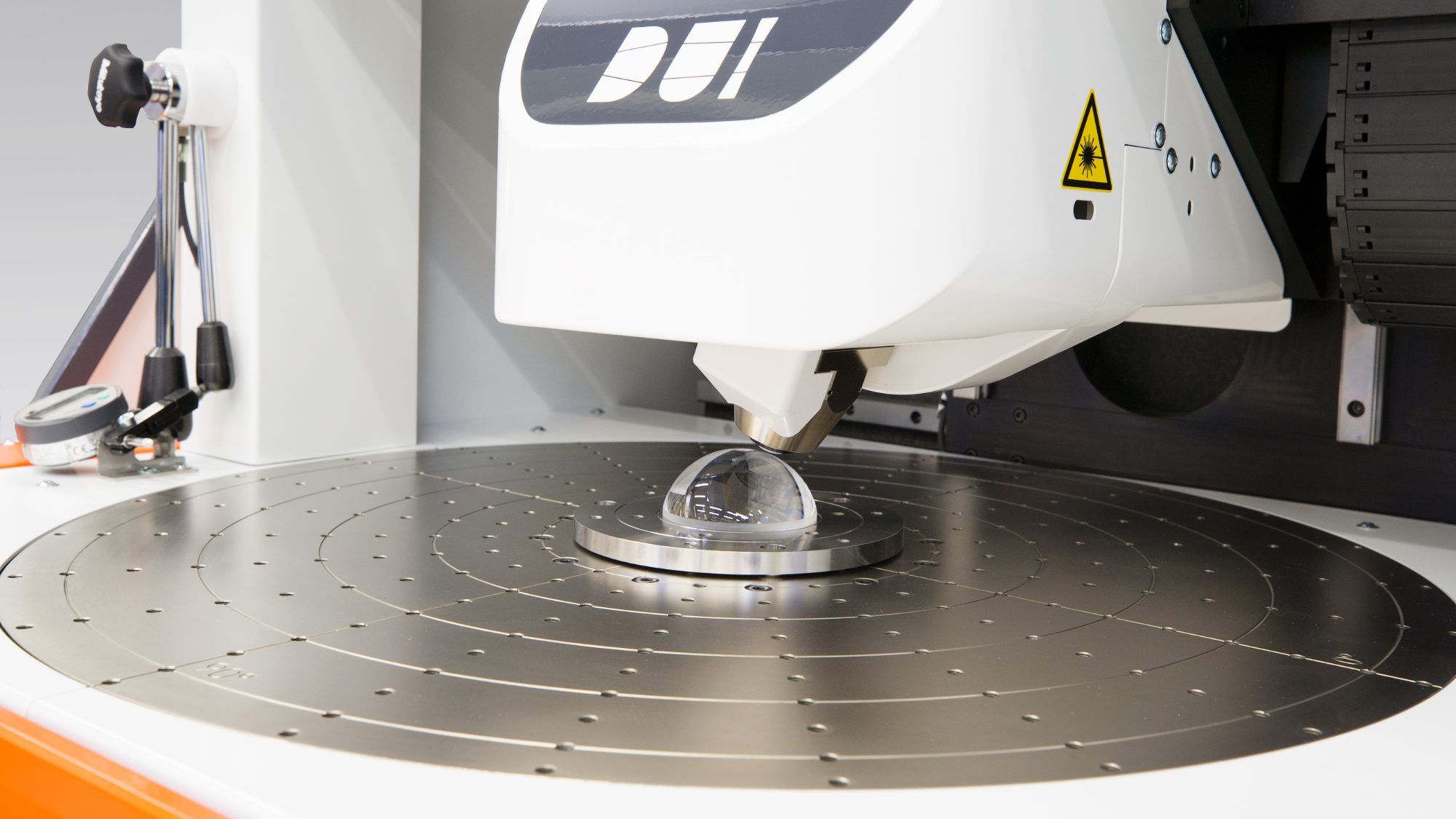

Conventional spherical lenses suffer from spherical aberration. Therefore freeform – often aspherical – lenses have become popular in lithography, aerospace, astronomy and microscopy as well as in (smartphone) photography. The paradox is those very accurate freeform lenses can be produced nowadays, but produced lenses can hardly be measured for quality control. That is where we stepped into a joint venture with Dutch United Instruments (DUI), with its Nanomefos metrology system.
highlights
• 1 to 2 nm accuracy in static measurements
• 10 nm accuracy in dynamic measurements
• 95 engineers worked on a successful redesign
complete makeover.
There are systems on the market that can measure freeform lenses with 40 to 50 nm accuracy, where 8 to 10 nm accuracy from all angles is required. TNO and TU Eindhoven developed the Nanomefos platform that was capable of that. Demcon took this as the starting point to develop a completely made-over commercial system for fast, contactless and highly accurate metrology. The team was lucky to have Rens Henselmans on board, who was involved in the initial Nanomefos development.
accuracy to the max.
Accuracy and stability are key to Nanomefos. A number of clever tricks were applied to attain 1 to 2 nm accuracy in static and 10 nm in dynamic measurements.
One of these is to first quickly measure over the axes of the object. Subsequently, the object is read like a compact disc for ten to fifteen minutes. This time-lapse typically leads to a considerable drift, that can be corrected thanks to the first quick measurement.
In order to measure accurately, it is also vital to exactly know the position of the probe relative to the object. Silicon carbide beams guarantee basic mechanical stability. Interferometry is used to define the position of the probe and object in space. Both vary hundreds of nanometers during measurement, but correctional calculations compensate for that.
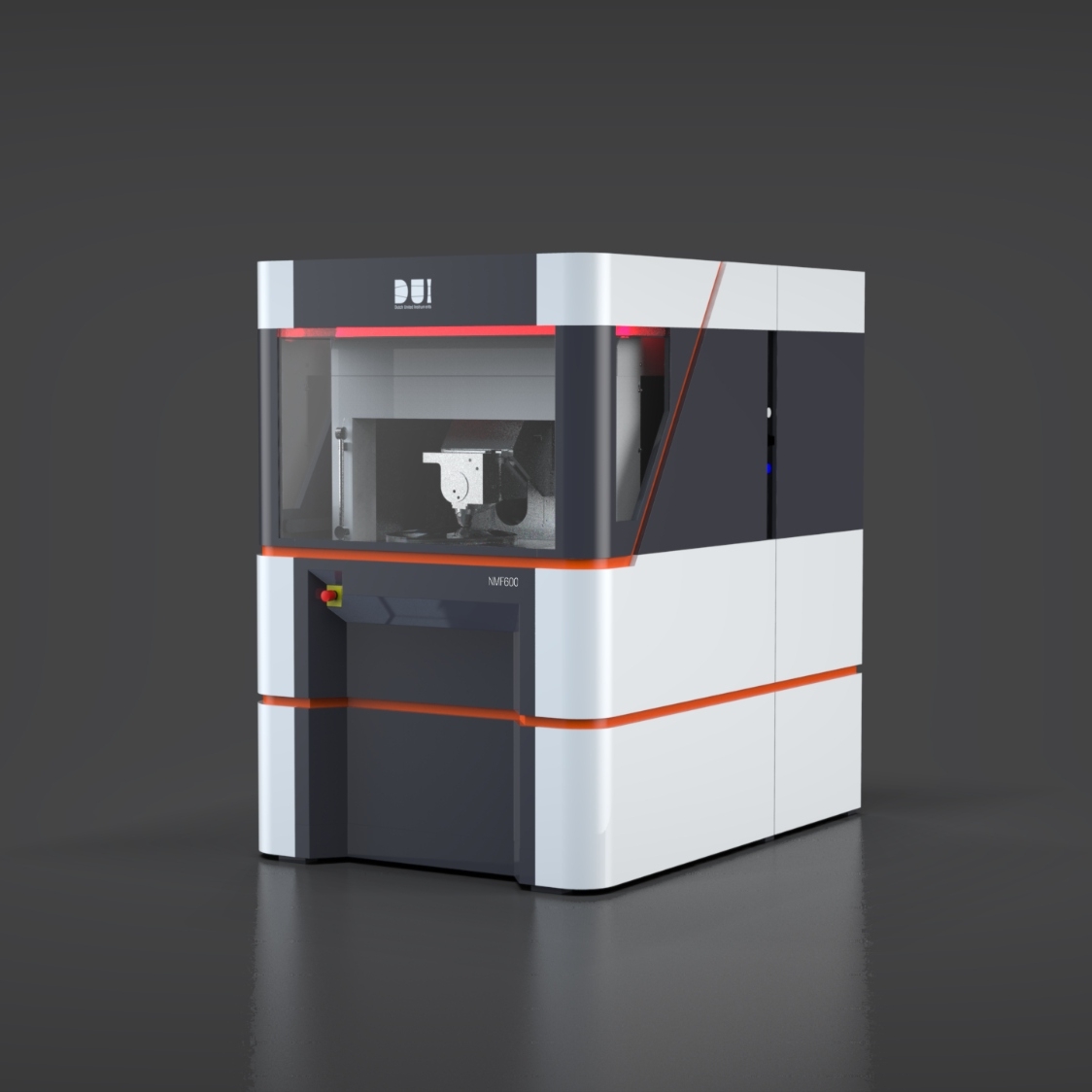
"success for a large multidisciplinary development team."
With a team of 95 engineers, we managed to successfully redesign a prototype into a commercial product. The team covered software, mechanics, electronics, optics, data analysis and data processing competencies alongside specializations within these fields. So far, DUI built three of these highly specialized systems and four more are being built now. That is quite an accomplishment and is very satisfactory.