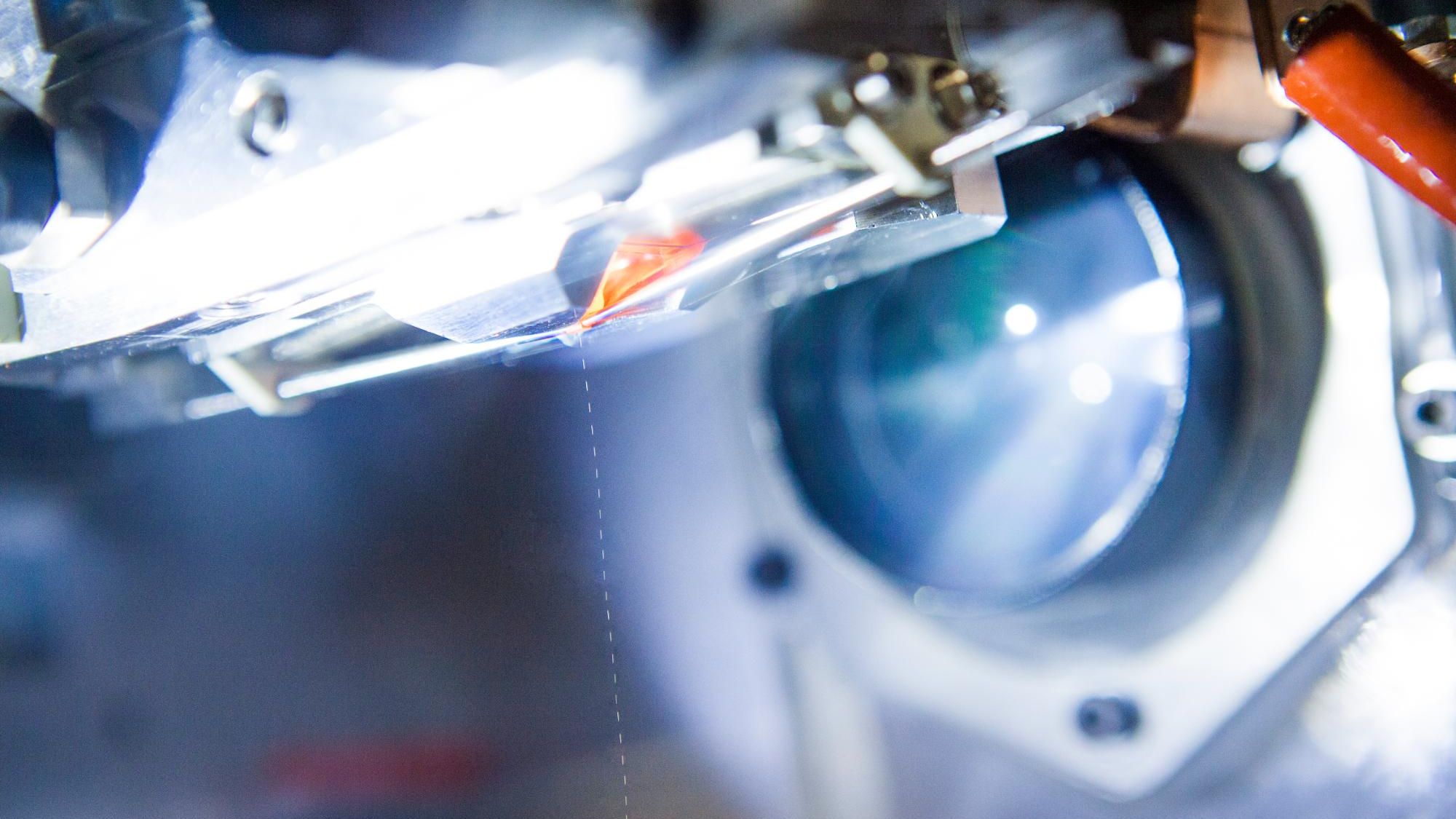

3D Metal Jet Printing is about printing products made from micrometer-range droplets of various metals. It thus holds the promise of combining the desired characteristics of those metals at exactly the locations where these are needed in a product. The high conductivity of copper and silver could be combined with the rigidity of aluminium or stainless steel. Demcon took on the challenge of enabling this process by meeting the daring printing conditions.
highlights
• thermodynamic simulation for temperature control
• high accuracy positioning systems
• development of dedicated control software
• a fully functioning metal jet printer
• meticulous temperature control
integrated solution.
At the University of Nottingham the interactions between droplets and substrate, and droplet to droplet, needed to be studied in order to develop the MetalJet process.
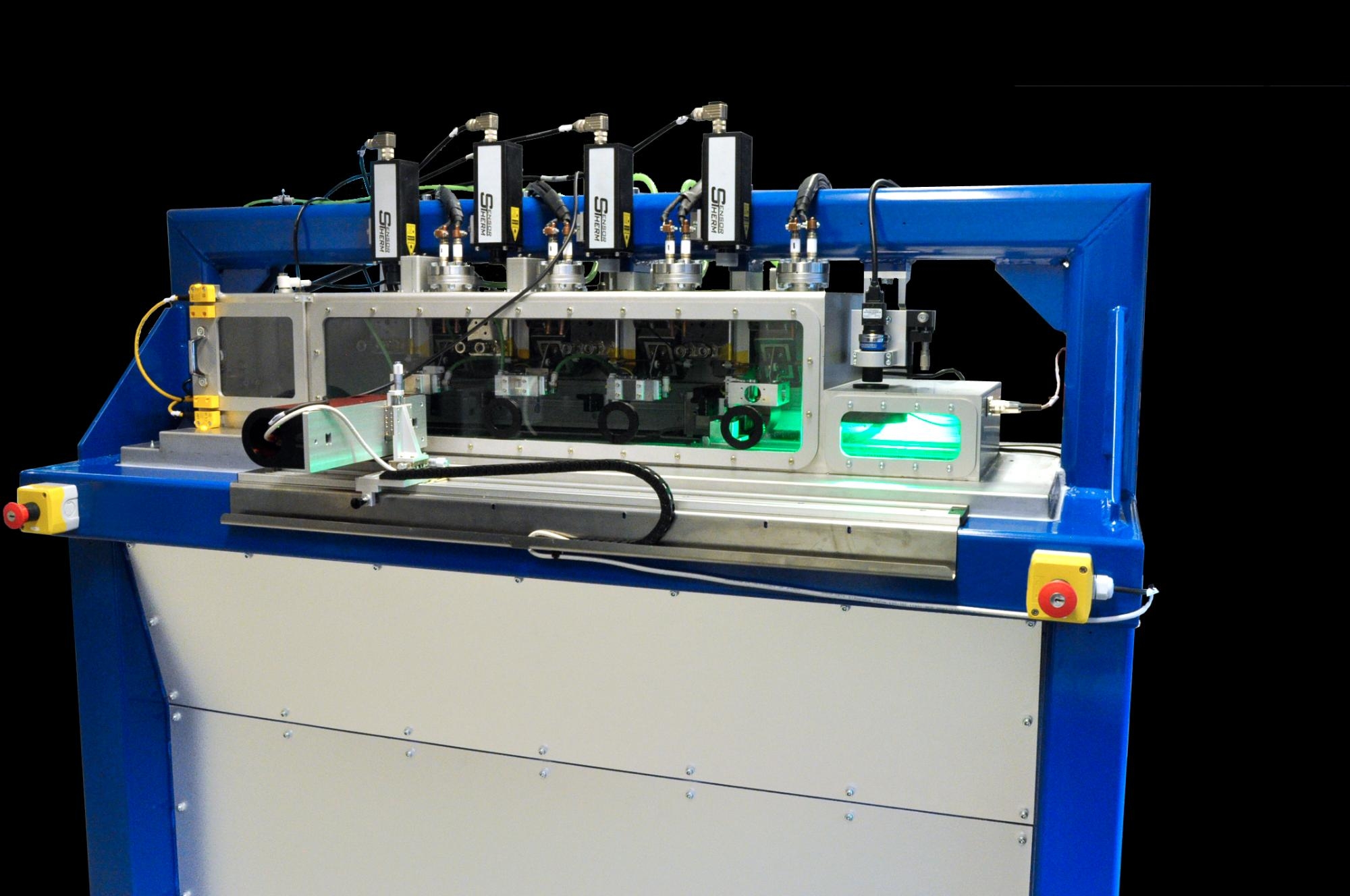
This asked for adding components such as cameras to verify and align droplet placement. A heater and coolers for temperature control around the print head were indispensable. On top of that all, custom software was written to regulate printer start-up and printing, including loading all layers of a 3D print.
The integration of equipment into a functioning system is a typical Demcon feat. The actual printhead was produced by Canon Production Printing. All modules were brought together in a small space. Even a separate camera system for self-calibration was built into the system.
An important field of application of the metal jetting technology could be electronics manufacturing, for instance, to produce ‘vias’, the bridges between chips. Another possibility could be the production of (prototype) Micro Electro-Mechanical Systems (MEMs).
a hot challenge.
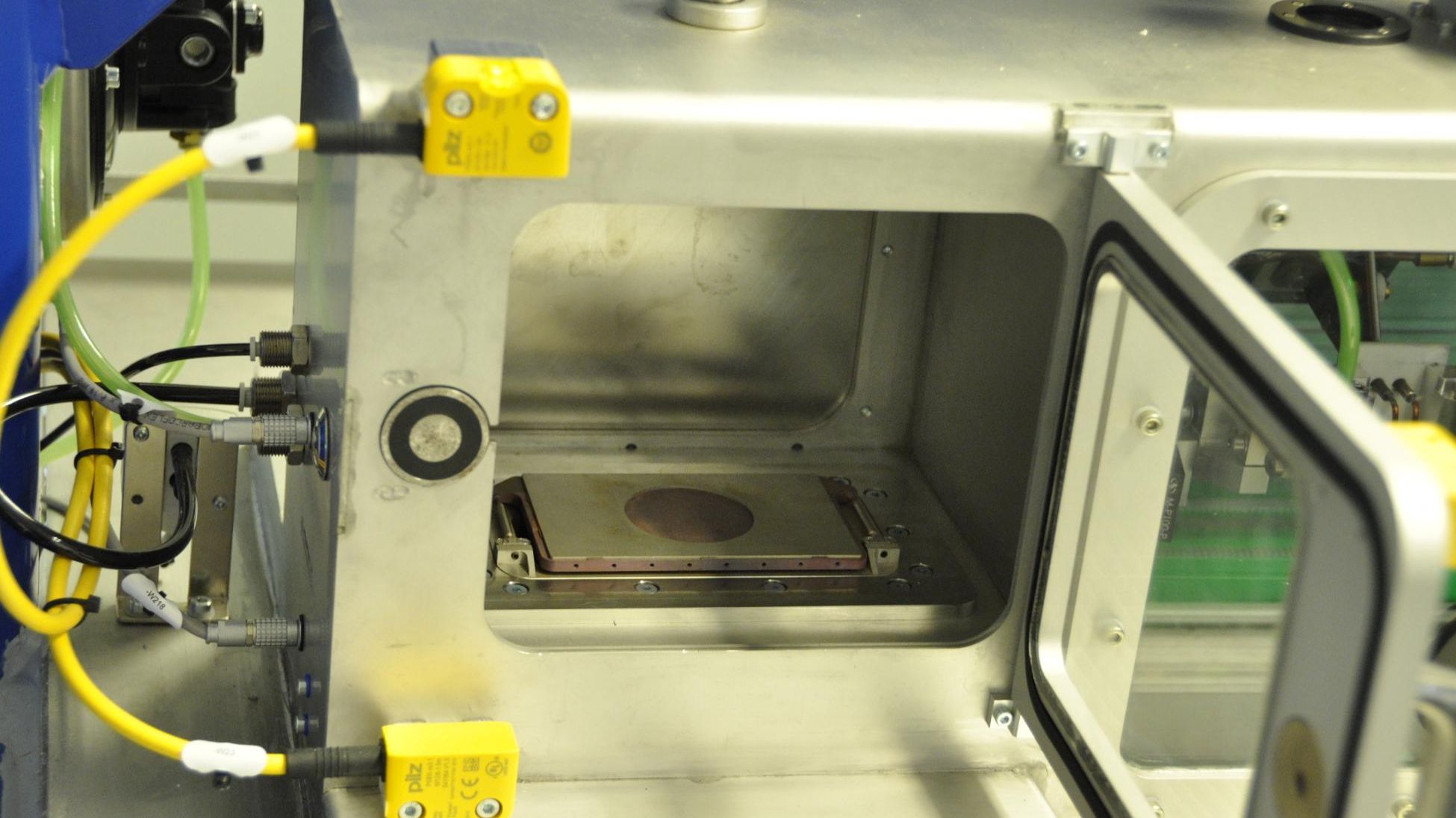
The biggest challenge of the project was the temperature control around the 1,800 ºC print head, placed at 10 cm above the 500 ºC substrate holder with vacuum clamp and very high quality heater element, located on a stage cooled down to room temperature.
This whole system had to function with 5 micrometer position accuracy. On top of that, this environment had to be made oxygen-free to prevent oxidation. This was created by a pure argon gas flow in a chamber in which the heart of the system was placed. The substrate holder was custom made from specialty materials to secure stability up to a temperature of 500 ºC. The fact that the stage underneath should remain at 20 ºC is telling about the cooling requirements.
"a silver logo."
The system was commissioned to the Additive Manufacturing and 3D Printing Research Group (3DPRG) at the University of Nottingham. The first object to be printed was a silver logo of the subsidy provider. Professor Richard Hague travelled to London to present it in person. I think that was a very stylish way to emphasise the project result.