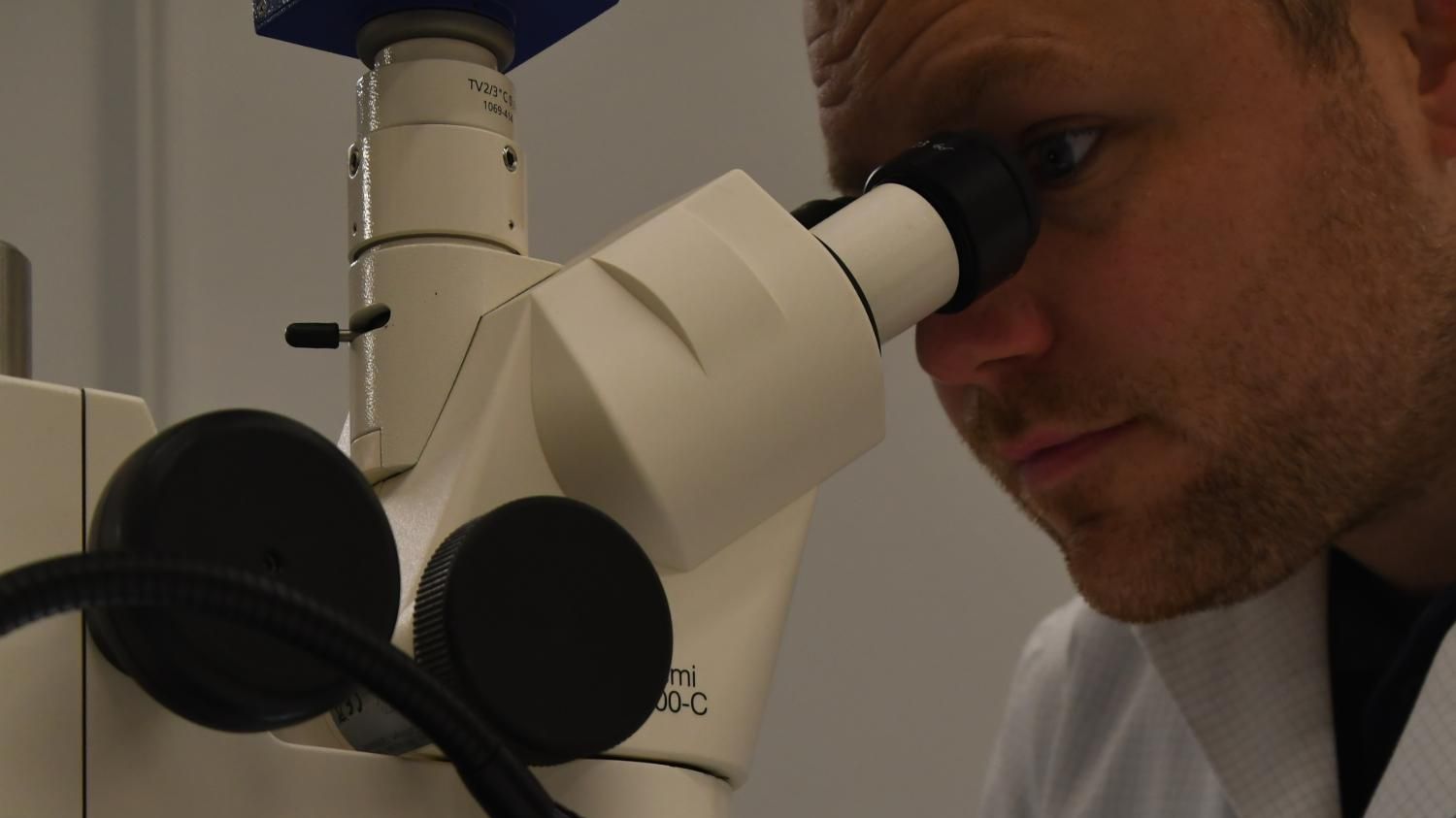

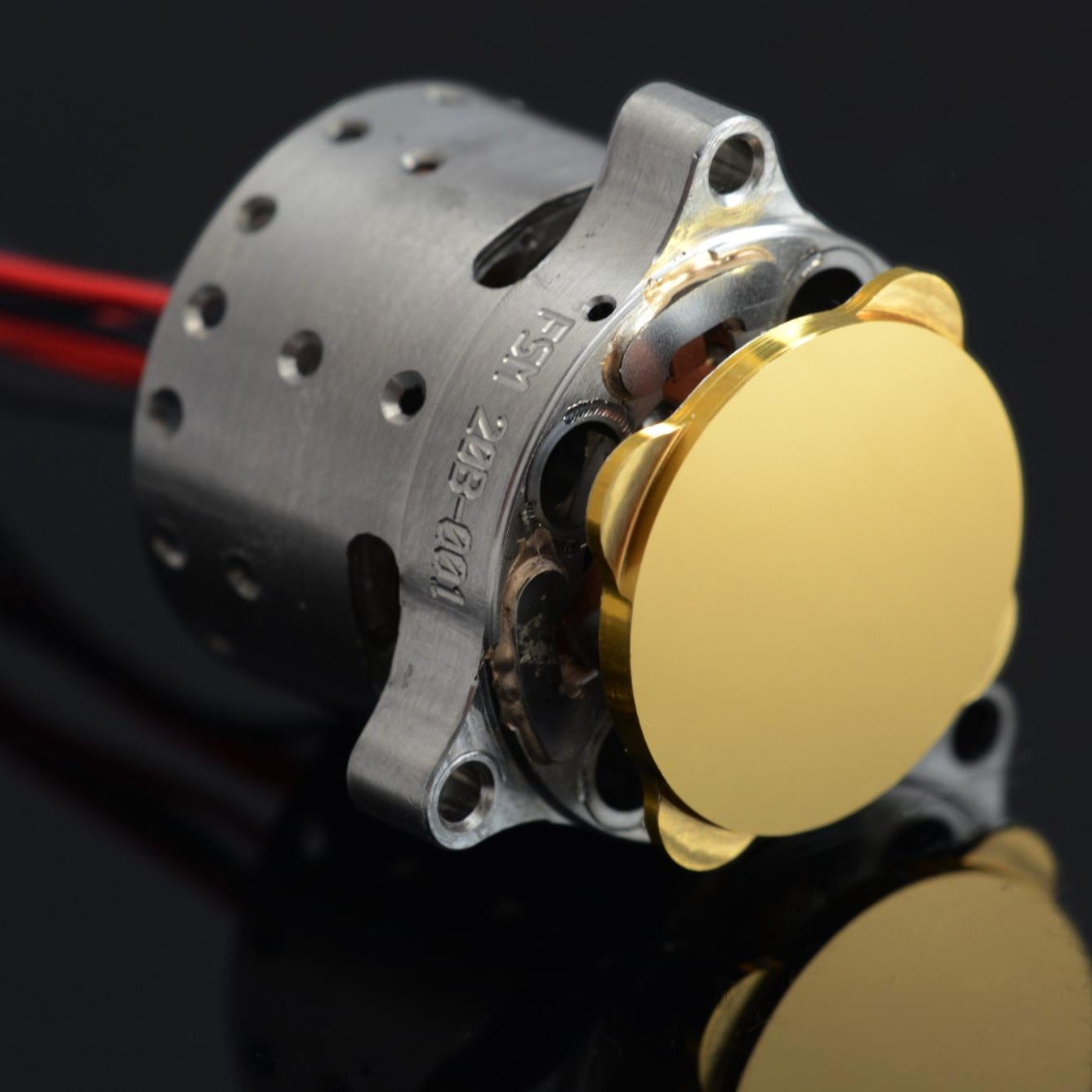
Precision laser beam steering determines the quality and bandwidth of satellite laser communications for fast and secure internet and data traffic. For this purpose, the Fine Steering Mirror (FSM) has been designed. We developed a TNO design into a prototype that is a space-compatible and light-weight, and has a lower power consumption. We can manufacture FSMs in large numbers.
highlights
• tip/tilt range of ±2º (optical)
• closed-loop bandwidth exceeding 1 kHz
• high-efficiency variable-reluctance actuators
• high-resolution, low-power, wide-range eddy-current sensors
• very low power consumption (< 0.2 W) at max. tip/tilt
high resolution, high dynamics.
The FSMs in the optical terminals of satellites, airplanes and ground stations provide for the accurate alignment of transmitter and receiver. Their mirror (20 millimetre in diameter) is extremely flat, to prevent wavefront distortion. For the development of a compact, space-compatible FSM, we applied our optomechatronics and manufacturing expertise in close collaboration within the Dutch FSO consortium. The FSM is capable of compensating high-frequency disturbances due to its highly dynamic response mechanism. It features a flexure-based design that enables high linearity and is maintenance-free.
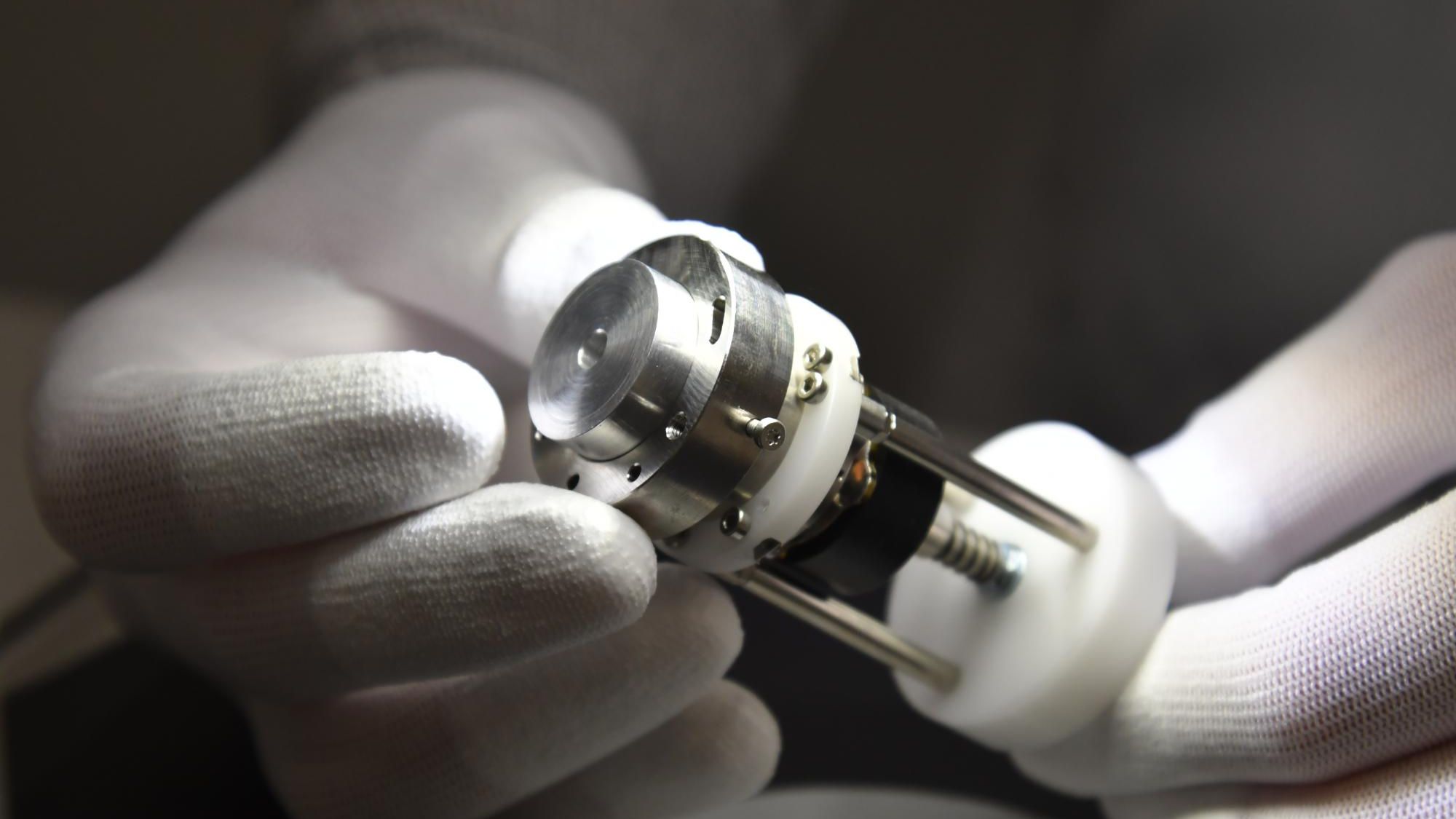
high efficiency, low thermal distortion.
Thermal effects can induce stresses and deformations in the FSM construction. Therefore, we used high-efficiency variable-reluctance actuators, which have a higher force-to-volume and force-to-energy ratio than alternative actuator types. We applied high-resolution eddy-current sensors for accurate pointing precision. An efficient design for manufacturing purposes allows us to produce these FSMs in large numbers.
"we successfully industrialized the FSM design."
The FSM’s industrialization presented us with various challenges. We made smart material choices, optimized manufacturability and reduced costs considerably. In addition, we designed special versions of components such as an extremely efficient actuator. We put the FSMs through their paces using strict test protocols, to ensure that they survive a launch and deliver high performance. Our FSMs can be supplied in accordance with the European standards specifications.