In the Netherlands alone, some 150 million tons of CO2 disappear into the air every year. Anyone who realizes that we have been emitting this unlimited amount for a century and a half knows it will take a lot to halt this process. By 2050 we should be there: no more CO2 in the air worldwide. Whether we will succeed is far from certain, but even if we do, we still have to get rid of all those carbon dioxides already in the air. An impossible task? Not according to Carbyon, the Eindhoven start-up that has taken it upon itself to suck all the CO2 out of the air.
introduction
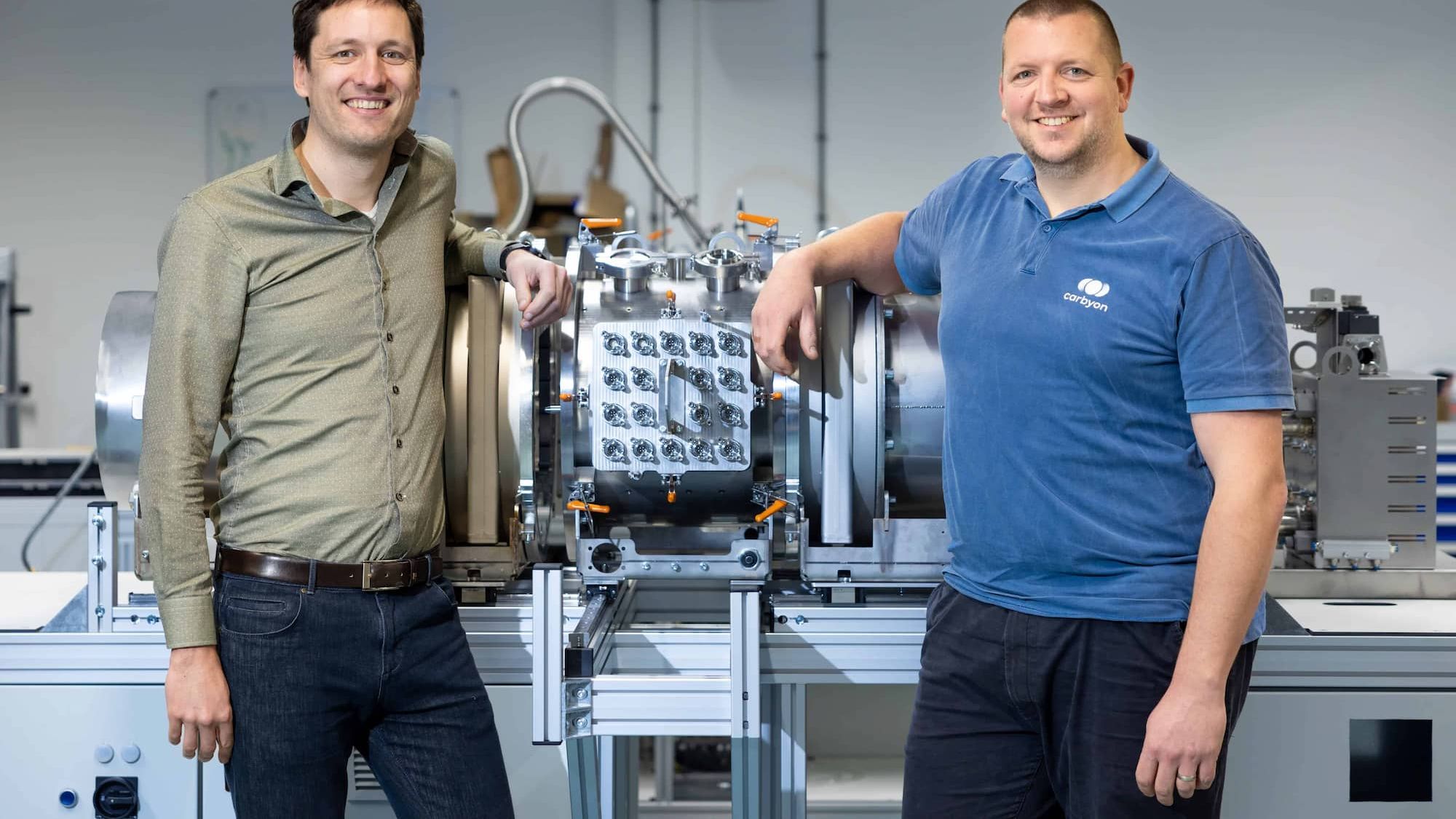
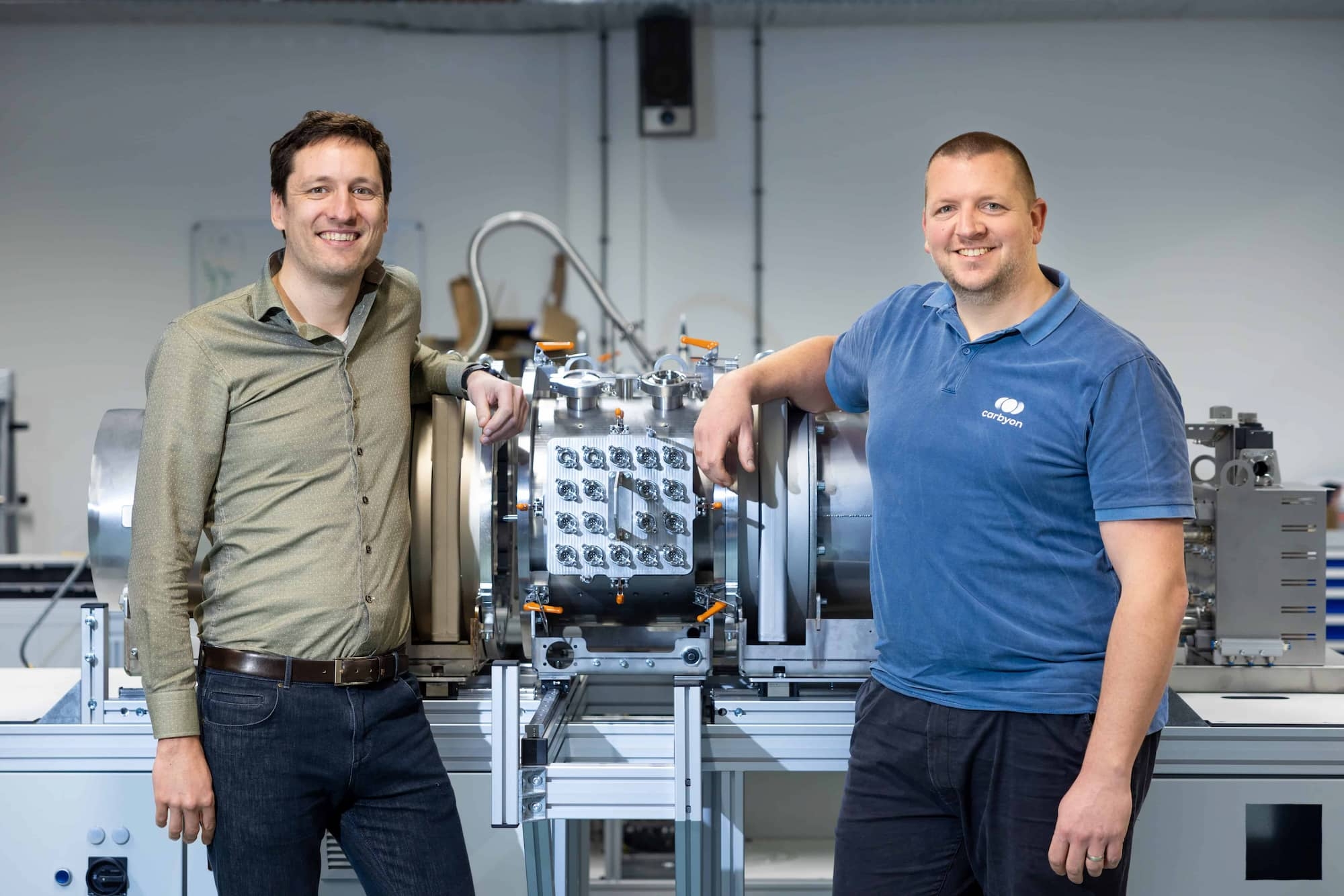
Yes, that sucking should be taken literally. The prototype machine that Carbyon and Demcon have built together is essentially nothing more than a large-scale vacuum cleaner, wheels including. Eventually, there will be entire fields of these machines worldwide, running on green energy and continuously extracting CO2 from the air. On one side of the machine, the air enters, and in the heart, the chemical reaction takes place that binds CO2 to the absorbent material, after which the CO2-free air is pushed out of the machine again.
What actually happens to the captured CO2?
Carbyon does not plan to operate the CO2 extracting machines by itself. They will be sold to companies that use them to make green fuels and chemicals. Green hydrogen and CO2 can then be used instead of oil and gas.
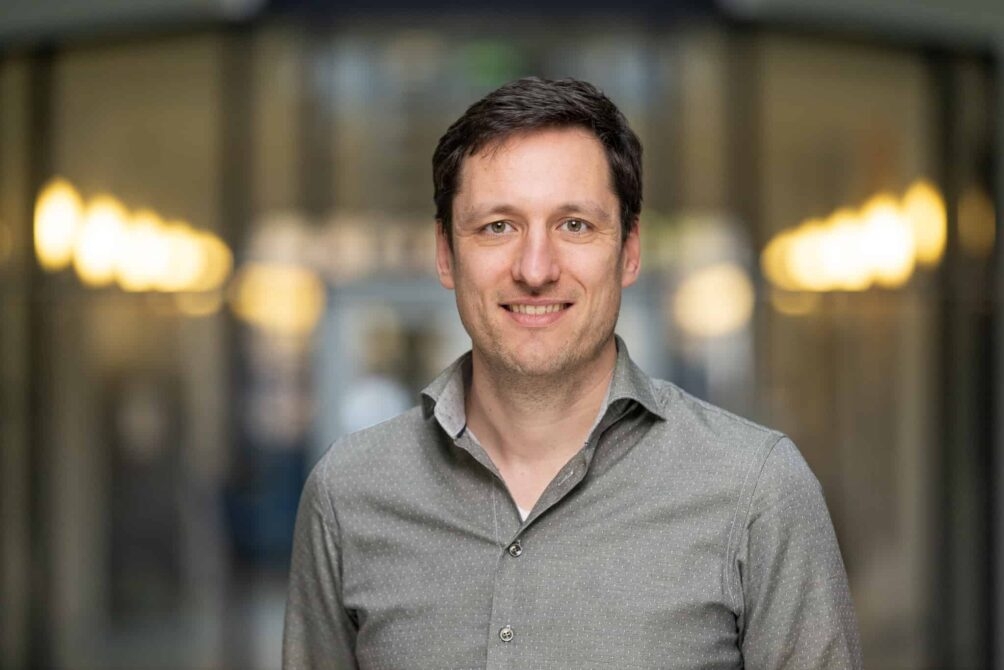
The original idea for the Carbyon CO2 vacuum cleaner comes from Hans de Neve, who conceived it while still working for TNO at Solliance. In 2019, he stepped out with his Friday afternoon project on direct air capture, founded his own company, and knocked on HighTechXL’s door for initial support. His big ambition is to contribute something substantial to solving the climate problem. That dream was so strong that he gave up his safe life for it and, partly with his own money, turned his focus to Carbyon.
Fast forward to 2023: there are now 25 people working for the start-up, mostly engineers with research tasks. And there will be many more in the coming years. Because if there is one inevitable consequence to a dream like Carbyon’s, it is that the only path to success is one of greatness. Great goals require great machinery and a great organization. As winners of the preliminary round of Elon Musks XPrize ($1 million), the first step on that path has already been taken.
not alone.
At the same time, De Neve and his team know they can’t do it alone. The organization is too small to solve everything in-house. And there is plenty of expertise in the immediate area, so why not use it? So it was no coincidence that Carbyon and Demcon crossed paths. With more than 30 years of experience in developing mechatronic systems and expertise in high-tech, Medtech, battery technology, and climate tech, Demcon was the ideal party for Carbyon to help build the first prototype.
Demcons project manager Leon van Breugel calls the collaboration a textbook example of how he and his colleagues like to operate. “We want to be the enablers to make customers successful, from the early concept phase to realization, including production and maintenance. There is, of course, a business aspect to that, but preferably we work on projects with a major social impact. Of course, that is abundantly clear in this project, which is why Carbyon is also such a good fit for us. It really is co-creation.” Van Breugel has worked for Demcon since 2020, with more than 200 employees at its Eindhoven location. He sees part of the added value in the diversity of experience gained from different customers. “Every new customer provides us with new expertise. And every subsequent customer benefits from that in turn.”
Carbyon’s COO Jasper Simons can only agree: “Demcon’s added value is essential for us in this phase. Their knowledge, their experience, the skills of their people; these are all aspects that have ensured that we can now work with that first prototype.” Until recently, the machine was still at Demcon, but since this week, it has been moved to the High Tech Campus, where the process of air capture can really begin.
working together.
The project was initiated by Carbyon, but the prototype was born out of a joint search for the best solutions. “So it’s not like we threw the specs over the fence after which Demcon could start working on them,” Simons says. “That wouldn’t be possible at all,” Van Breugel immediately adds. “Because we almost never work like that at Demcon. The success of every project with us depends on how we shape the collaboration. The project team has representatives from both sides continuously working together.”
Now that the first machine is ready, that does not mean Demcon’s role is over. Van Breugel: “On the contrary, we are still closely involved in the next iterations. When Carbyon is ready to start mass production, our part will be finished. But until then, we will be there for them, including the production of the first dozen machines.”
Carbyon hopes to scale up quickly. Simons: “This prototype took a lot of time, of course, but soon we will be able to build one machine every two weeks, and a little later two per week. By 2030 there should be production as we know it from a car factory: assembly line work.” The final model, by the way, will bear little resemblance to the machine that can start delivering its first results now, if only because of the size required. The current machine “harvests” about a ton of CO2 per year, the full-sized units – each the size of a shipping container – will soon gain 100 tons. By 2050, so many machines should be operating that a billion tons can be extracted from the air.
forest or city.
Isn’t that the perfect condition for another discussion like the one now running around windmills? Who wants a shipping container in their backyard? Simons: “First of all, if something is the size of a shipping container, that doesn’t mean it looks like such a thing. But apart from that, we think mainly of industrial sites or remote places without high natural value. Because while we may need a lot of our devices, that doesn’t mean you’ll find them everywhere.”
Is there actually an ideal place for a CO2 extraction system? Simons: “It doesn’t matter that much because the proportion of CO2 in the air is more or less the same everywhere in the world. Everywhere now, you see a concentration of over 400 ppm; it hardly makes any difference whether you are in a forest or a city. Even between winter and summer, there is only a small difference. That also makes the CO2 problem global: CO2 does not respect borders, and it is nonsense to have as a goal to clean up your own CO2.”
A hard condition for the location of Carbyon’s machines is the availability of green power. “Southern Chile, where it is always windy, could be a good spot for that reason. Right next to wind turbines. Also, it would be good to use and store energy in one place.” You can then create the “Carbyon parks” as big as you want. “However, there must be a few meters distance between the devices themselves because it is not the intention that one machine will start sucking up the just-finished air of its neighbor. Then it makes little sense, of course.”
effectiveness and price.
Carbyon is not the only company engaged in CO2 reduction through air capture, yet the start-up believes it can offer two key advantages over the competition: effectiveness and price. “Our process takes five minutes, while at others, it takes five hours. In addition, it costs a thousand euros to capture a ton of CO2 with current machines. We think we should be able to do it with a hundred euros.”
The prospect of winning one of the top prizes in Musk’s XPrize competition provides an extra incentive in this regard. Simons: “When we were chosen as one of the first winners last year, we landed on a cloud; that’s how happy we were. But it also motivated us as a team to continue working even harder to scale up. There is $50 million waiting for the one that manages to capture a thousand tons a year. A challenging goal, so we plan even more ambitiously than we already did. We are guided more by the principle of ‘Fail fast, fail often‘ than by an extremely detailed elaboration of the specs for each subsequent step. I must say: I can recommend every start-up to approach it this way; it gives an enormous spirit to your company. And working with an external development partner like Demcon helps us achieve this needed acceleration.”