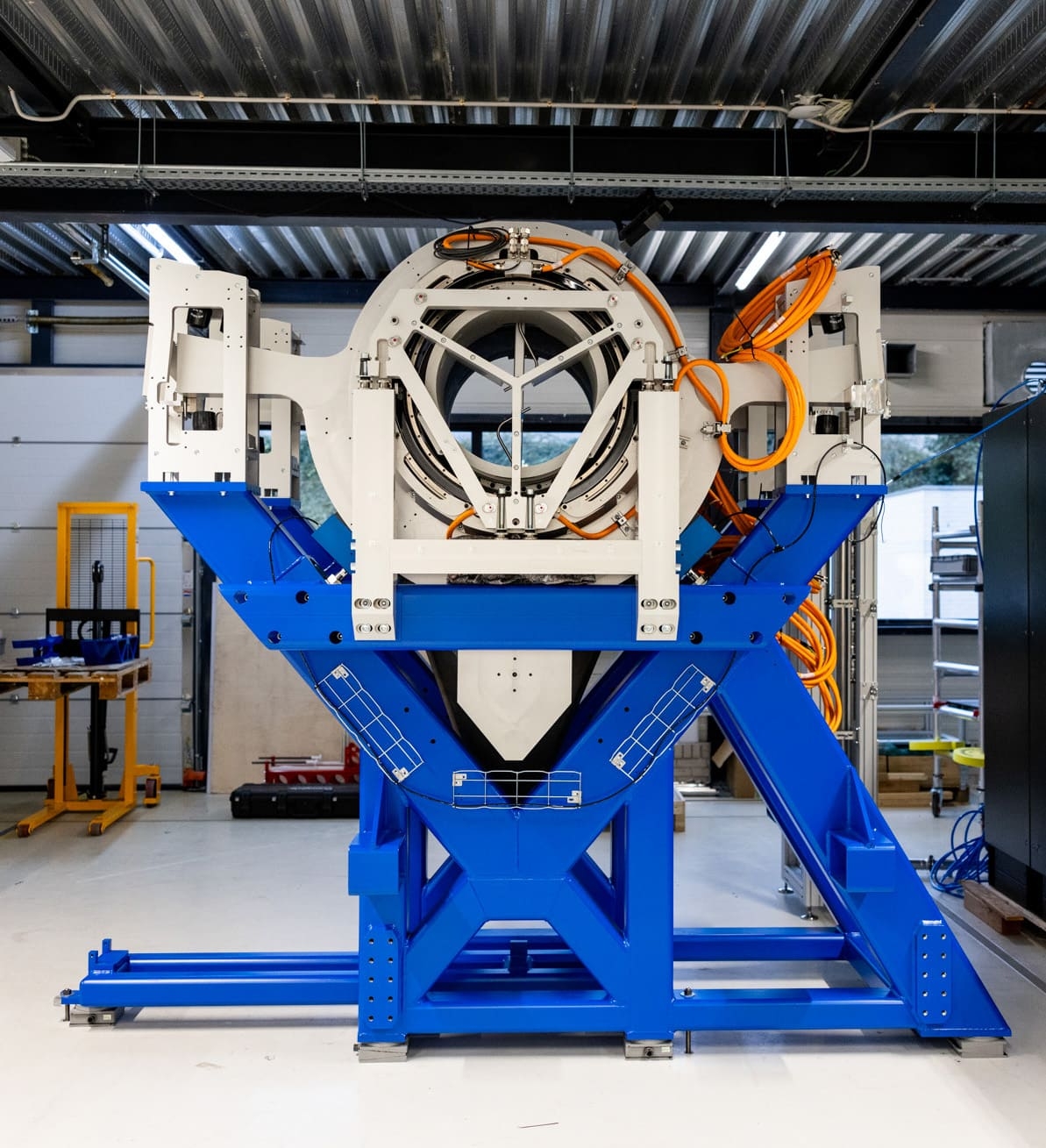
Demcon high-tech systems developed a high-G motion platform designed to enable component testing under extreme dynamic conditions. The system was developed in response to increasing demands for higher productivity and higher acceleration in advanced equipment, where state-of-the-art motion architectures reach their physical limits.
By moving away from conventional linear motion concepts and adopting a rotational actuation principle, the engineering team created a test platform capable of achieving higher acceleration levels while maintaining system stability and control accuracy. The project illustrates how multidisciplinary engineering enables new performance levels in high-tech motion systems.
industry context
High-tech industries such as semiconductor equipment, precision manufacturing and advanced automation increasingly require validation of components under severe dynamic loading conditions. As system productivity increases, acceleration levels also increase. This introduces new risks related to mechanical interfaces, cable behaviour, connections and structural integrity. Understanding these effects requires test platforms capable of reproducing extreme motion profiles in a controlled and repeatable way.
Linear motor systems, as commonly used today, perform well within certain dynamic ranges, but as acceleration demands increase, physical limitations such as motor mass and thermal constraints begin to restrict further performance improvements. This creates the need for alternative motion architectures capable of extending achievable acceleration ranges.
engineering challenge.
The key challenge was to develop a motion system capable of generating extremely high acceleration while maintaining:
- Mechanical stability
- Positioning accuracy
- Structural integrity
- System reliability
- Controlled force transmission
Earlier systems using linear motor concepts were capable of achieving acceleration levels up to 60 G, but further performance increases required a fundamentally different design approach.
Rather than further optimising linear motor technology, the engineering team evaluated alternative actuation principles.
engineering solution.
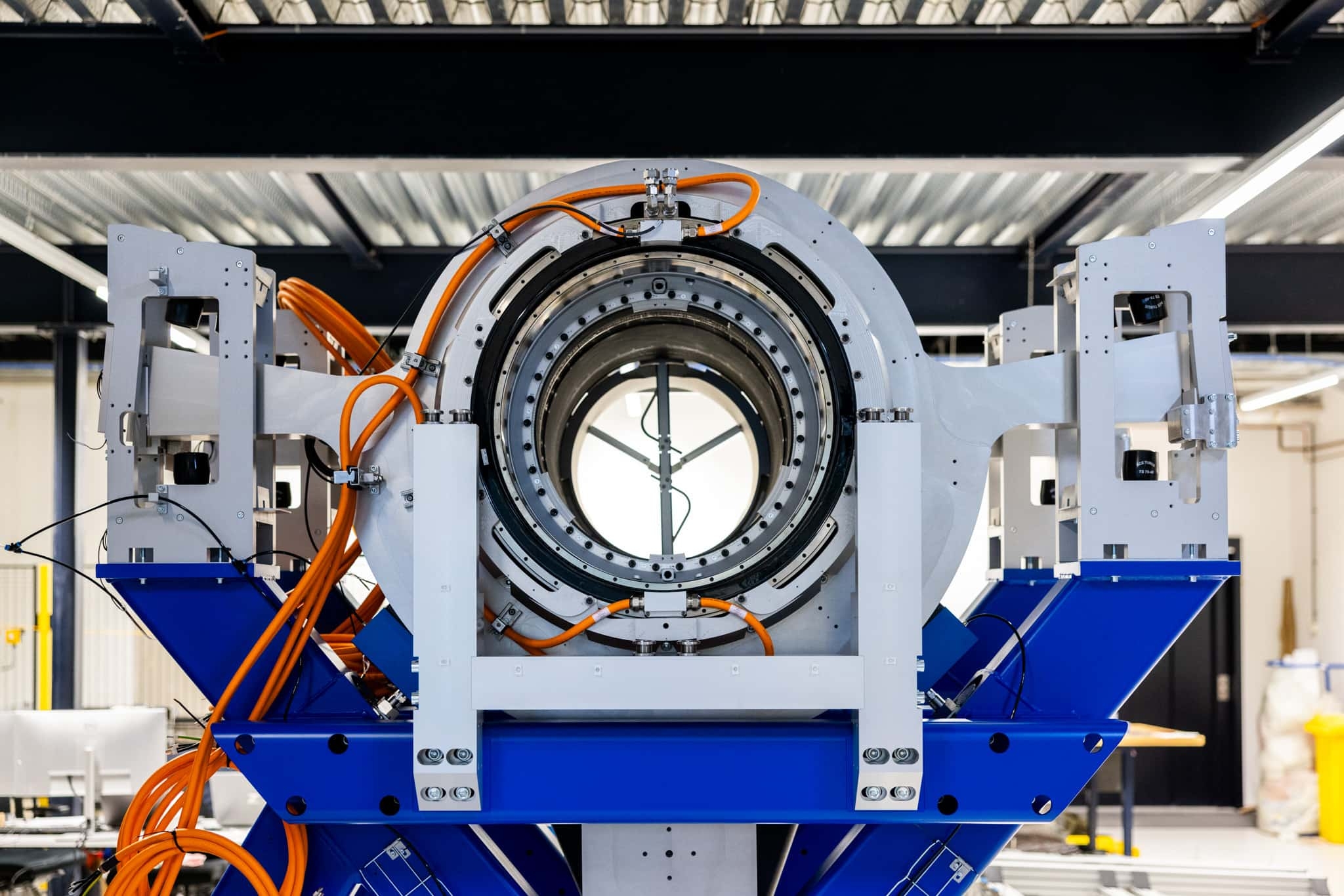
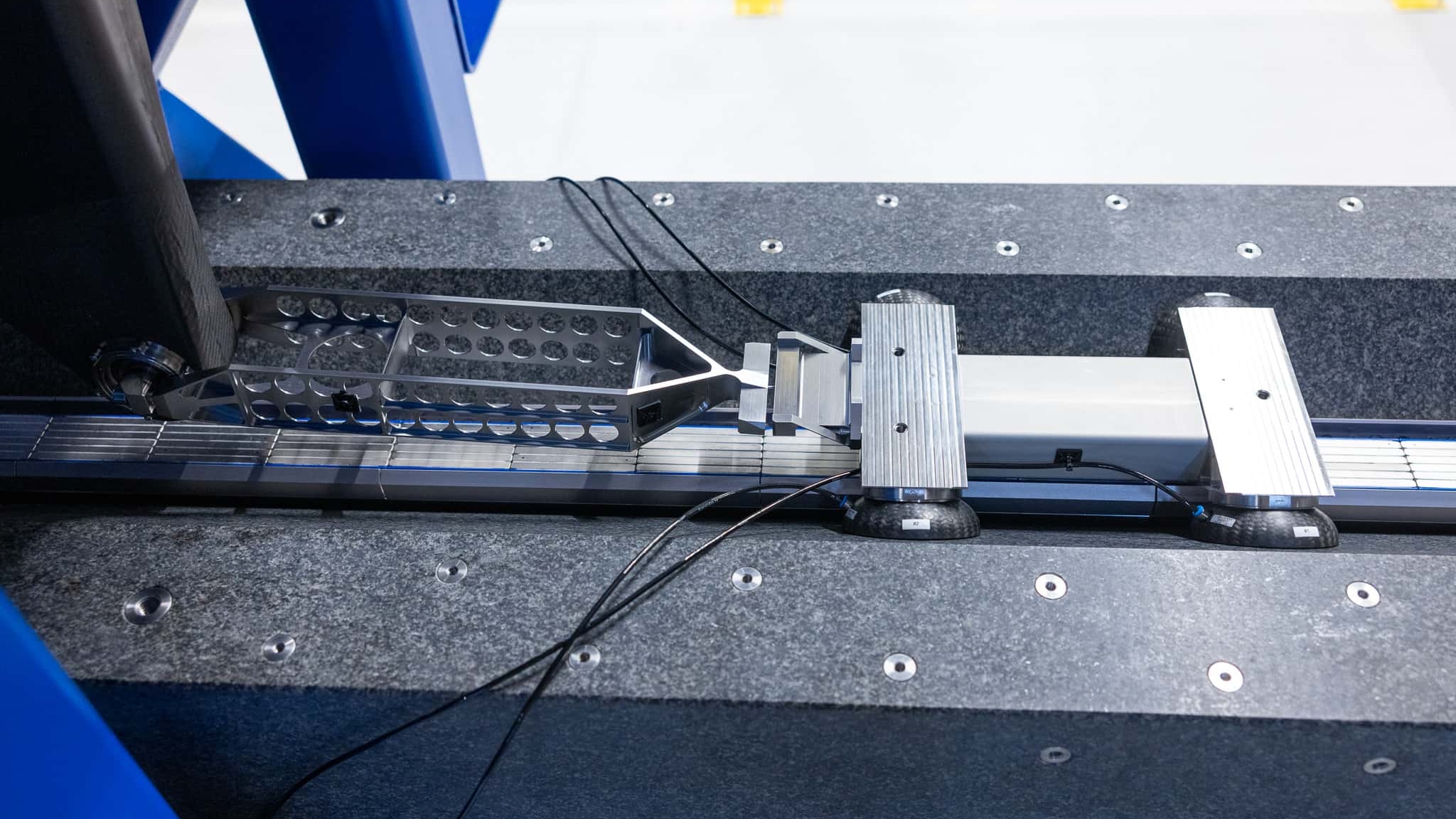
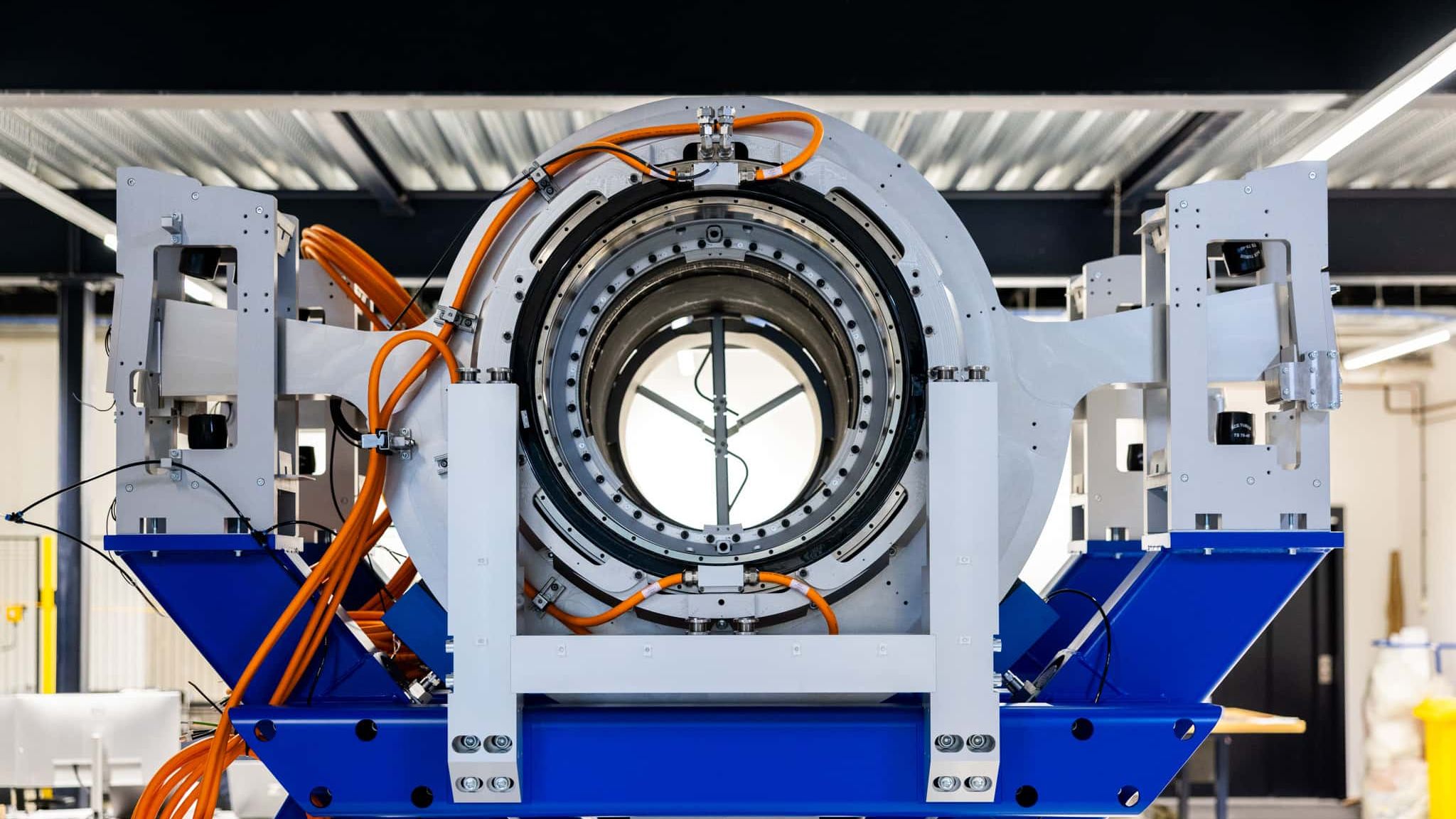
Demcon high-tech systems developed a rotational crank-based motion concept in which rotational motion is converted into reciprocating linear motion of the payload. Key engineering design elements include:
- Handling high electrical peak powers
- Carbon fiber crank construction
- Precision bearing and hinge interfaces
- Custom mechanical balancing
- Custom motion controller
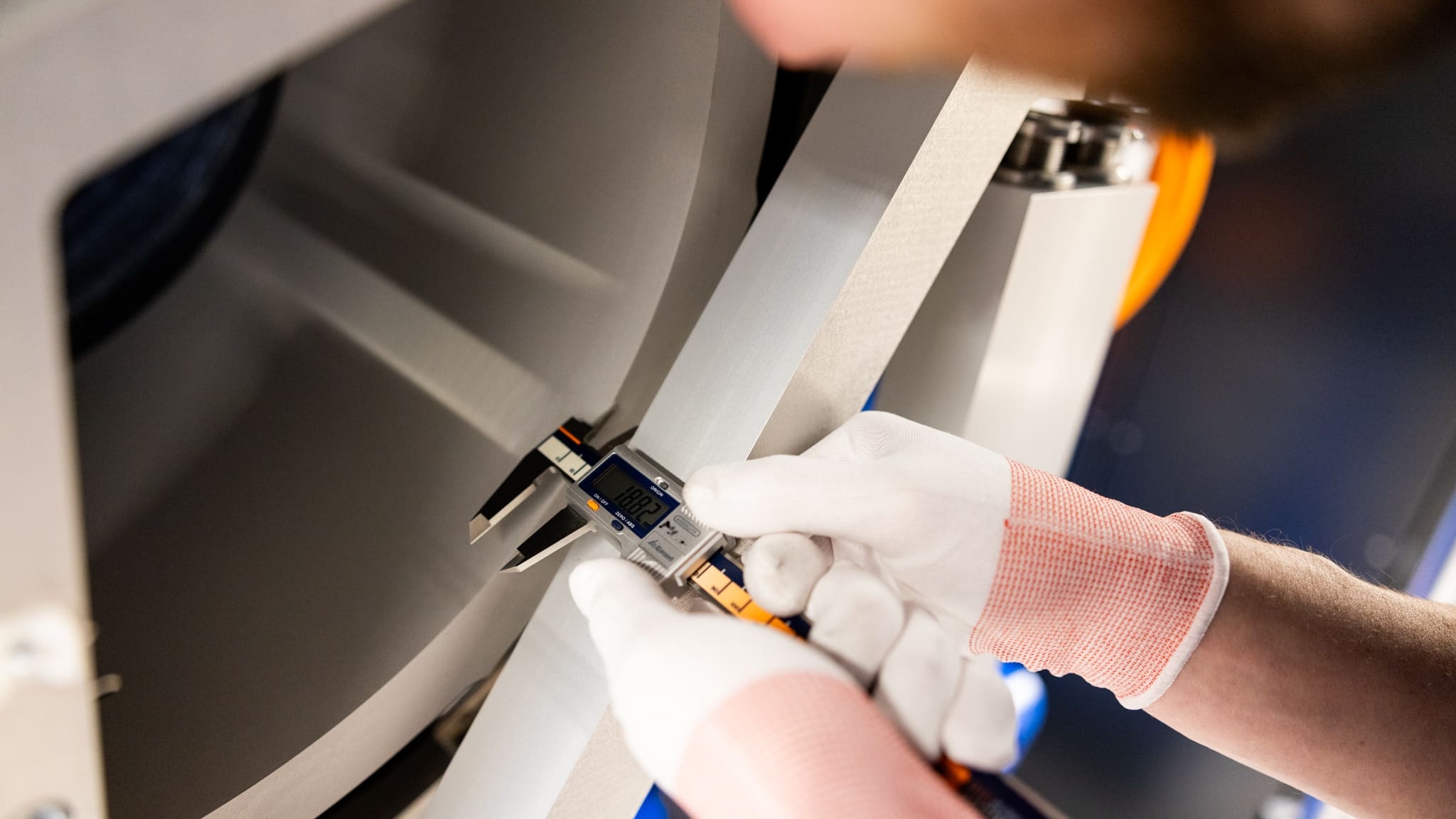
- Connecting a rotational to a translational motion without introducing play
A critical aspect of the design was the integration of rotating balance masses to counteract reaction forces and reduce structural excitation.
enabling extreme dynamic testing beyond linear motion limits.
quantified results.
Key system characteristics include:
- Acceleration performance beyond traditional linear motion limits
- Reference system capable of more than 60 G acceleration
- Peak power levels in the megawatt range, without disturbing load on power net
- Four-motor architecture for force distribution
- Reduced structural excitation through force balancing
- Good servo following behavior through demanding motion profile
applications.
Example application areas include:
- Semiconductor equipment validation
- Cable and connection testing under dynamic loads
- Precision manufacturing component testing
- High-performance motion research
- Advanced equipment development
technology stack.
The system integrates:
- Mechanical system architecture
- Mechatronic design
- Motion control engineering
- Dynamic system modelling
- Structural force analysis
- Custom control development (Simulink)
- Multi-motor torque distribution
- Motion profile validation logic