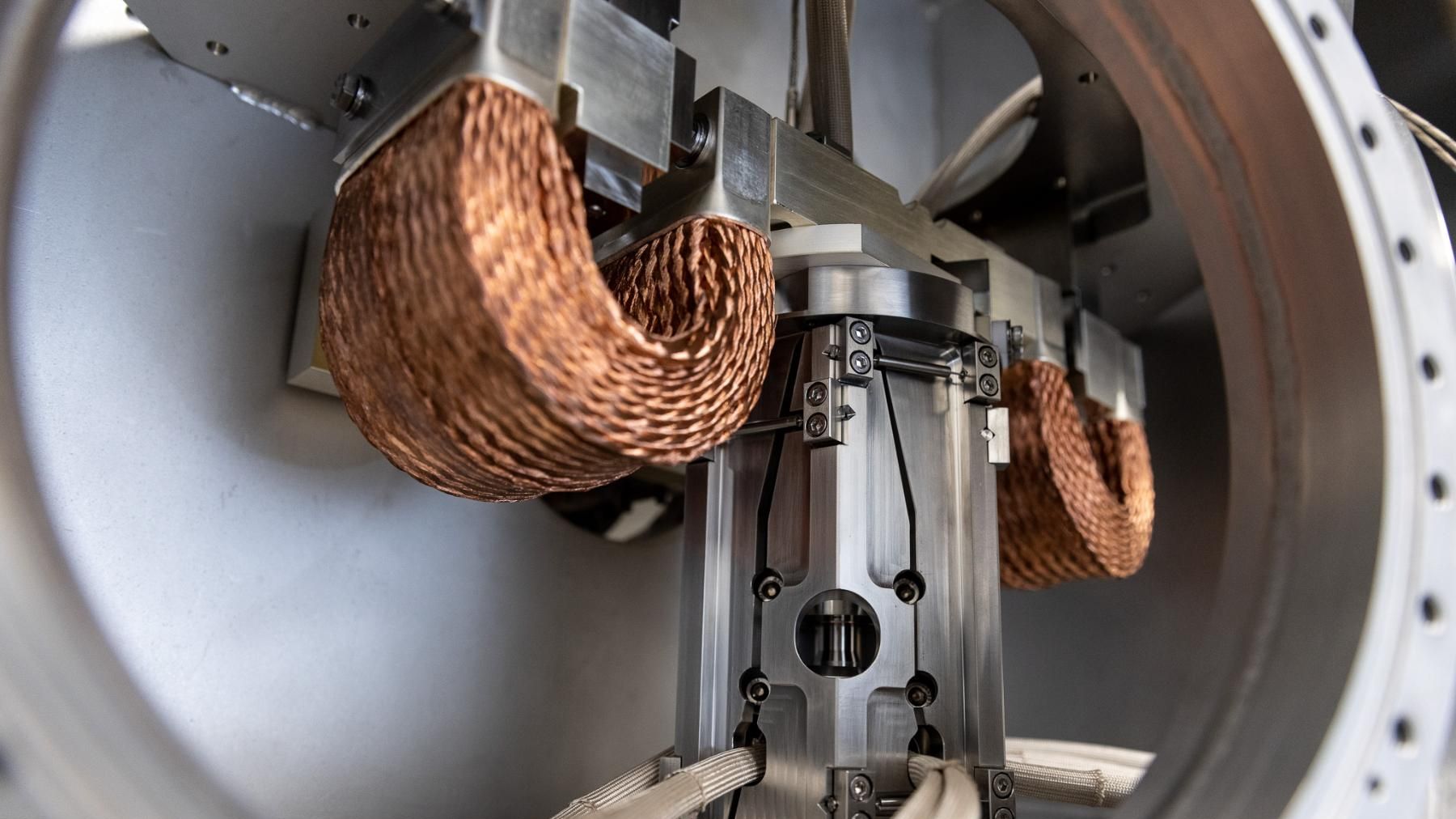

Exposing a component to a very high heat load is complex. Especially when the component is the size of a straw. The resulting stresses in the material can be so high, that it is reaching the boundaries of the material. To make sure the component actually survives this volumetric heat load Demcon developed a setup that can simulate the actual heat load on a similar component.
joule heating and big copper wires.
In order to simulate this high heat load, we had to think of alternative strategies, especially regarding the small size of the component. A high heat load density can be realized by inductive power or possibly through infrared. But in this case, we chose Joule heating because it offers the most representative heat load with respect to the application. To reach the applicable power, a current of 15 kA is required.
To give a perspective on the amount of energy we have to deal with: if you put this same current on a regular copper wire used for everyday applications, this wire would melt within 30 nanoseconds. Therefore, amongst other things, the power supply is connected with big copper cables to the test set-up. For reference, the diameter of these big cables is the size of a banana. The surface area of these cables is about 2000 square millimeters. And the resistance of these cables is only about a micro Ohm. Furthermore, these cables are water-cooled and some silver plating is used on the connections.
testing the actual component.
Because the set-up is only meant to investigate the actual thermal gradients on the component and the related stresses, and not the stresses caused by the massive copper components – a fully compliant connection is designed. In which the application of the power supply of the current can be decoupled from the actual component itself.
It is important that the copper wires stay flexible – even under a high current, therefore we used braided copper in our set-up. And because the component will expand, it needs to expand freely for it not to rupture. We only wanted to see the results of the stresses caused by the thermal gradient of the actual heat, so we designed the component with only 1 degree of freedom.
The test section is connected between two copper rings that are connected to the electrode. Because the test section is very high in resistance, the pieces are connected with gold soldering to make sure that there is a durable connection that is also ductile at high temperatures and remains there at these high temperatures. Silver for instance wouldn’t work, because it would fuse into the copper.
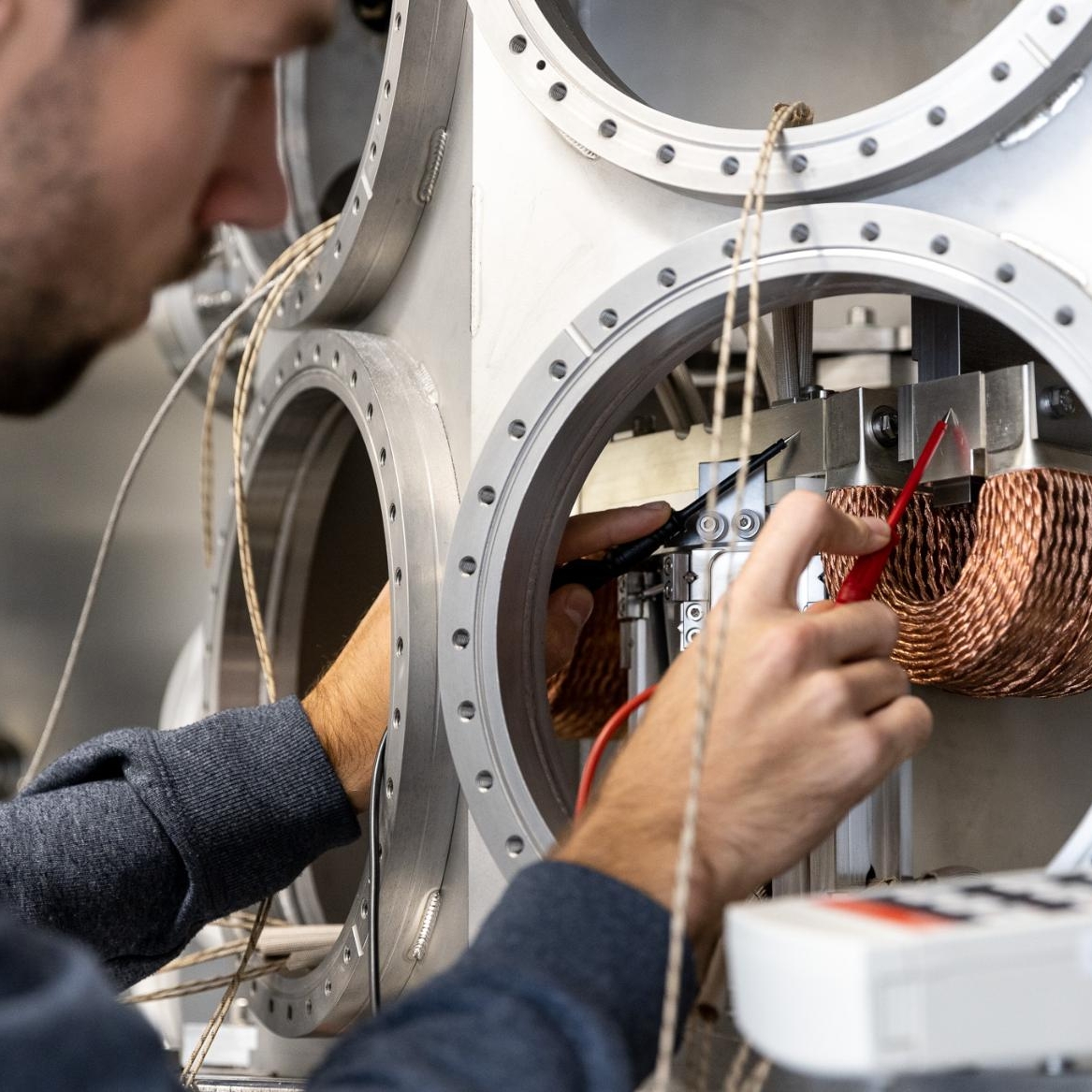
“at Demcon we like to do tests because it is always an opportunity to break stuff.”
This project was very complicated and a lot of work. But, I am very proud of our team after doing all the designs, making all the analysis, and finding all the issues, we succeeded in the design setup.