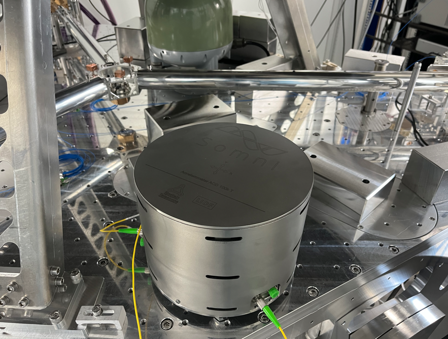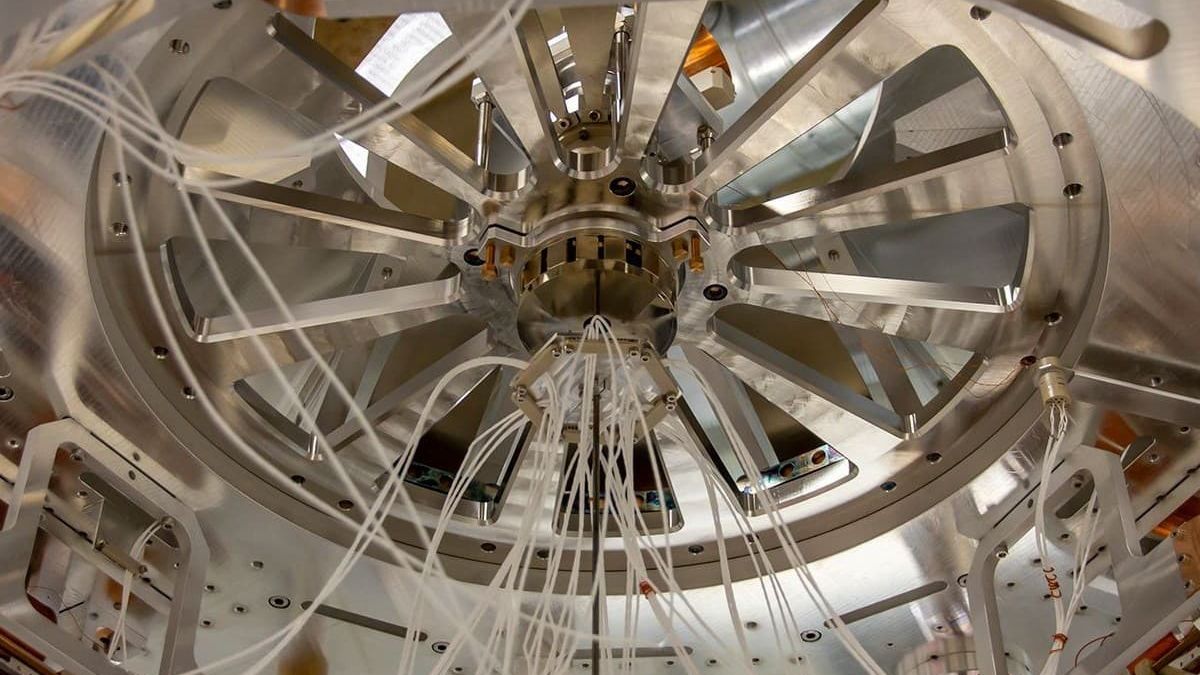
The Einstein Telescope, a major big-science project, uses ultra-precise mirrors to push the boundaries of gravitational-wave detection. To enable measurements of such extraordinary precision, these mirrors need to be shielded from environmental vibrations as effectively as possible and therefore kept virtually ‘vibration-free’. Extremely sensitive sensors are needed to achieve this. This is what the SENVIDET consortium (Sensor Engineering for Noise and Vibration Isolation and Damping in Einstein Telescope) is working on, with a particular focus on low-frequency vibrations.
Within the SENVIDET consortium, Demcon high-tech systems contributes its systems engineering expertise to the development of next-generation sensor technology for the Einstein Telescope. The team supports the integration and positioning of newly developed sensors into the control system that keeps the mirrors motionless.
The Einstein Telescope requires an exceptionally stable environment to detect gravitational waves with unprecedented sensitivity. Even the smallest environmental vibrations can affect the performance of its ultra-precise mirrors, creating a need for entirely new sensor technologies capable of measuring extremely small movements at very low frequencies. The SENVIDET consortium was established to address this challenge through the development of advanced optical and interferometric sensors.
Within the consortium, Demcon high-tech systems leads the systems engineering. This includes defining how the sensors should be positioned within the telescope's isolation architecture and ensuring their integration into the control systems that actively keep the mirrors virtually motionless.
In the project CRYOCOOLING | Zero-vibration Sorption Cryocooler for Einstein Telescope, Demcon kryoz plays a key role. Read their showcase about the Vibration free crycooler for ET.
The project has already reached several important milestones, including successful prototype demonstrations and the commissioning of new validation facilities. These achievements bring the consortium another step closer to realizing the extremely low-vibration environment required for future gravitational-wave observations.